
Post Procedural Advice
Permanent Make Up Aftercare
Aftercare Advice
Following aftercare instructions is essential for proper healing and long-lasting results. Mild redness, swelling, tenderness, itching, and flaking are normal during the first few days.
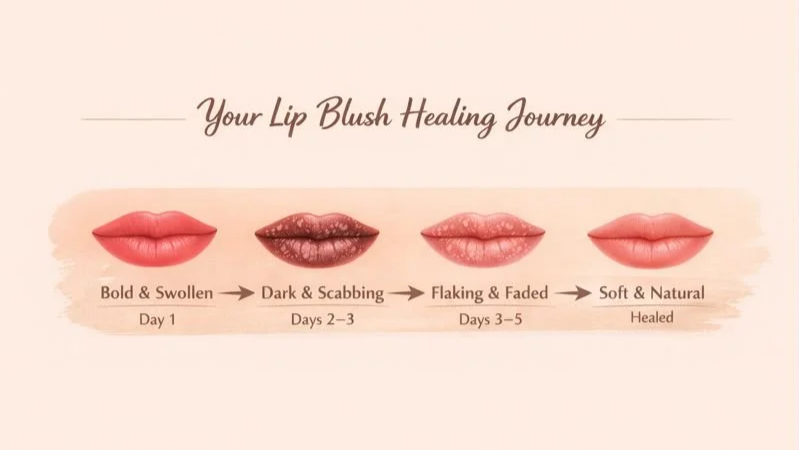
For two to five days after the treatment, the procedure area may experience the following symptoms:
Flaking, tenderness, dryness and itching, swelling, redness, eyelashes may stick together and eyelids may appear red and puffy after any eye procedures
For at least 5 to 7 days after the procedure or until the area appears to be healed, include the following in your daily routine:
Eyebrows
Blot gently with damp cotton wool to remove any residue
Use a fine layer of the given moisturising ointment 3 times a day or as needed
Do not tweeze for at least up to a week after the treatment
Keep dry area does get wet, pat dry very gently with a clean towel or tissue
Lips
Apply moisturising ointment 3 times daily or as needed
It is advisable to use a straw to drink fluids immediately after the treatment
Blot gently with a damp cloth if the area gets wet
*If you have ever had cold sores or herpes simplex in the past it is important that you continue to use medication for 7 days after your lip treatment, as you did 7 days before. This will help prevent an outbreak, which causes discomfort and could result in scarring
Eyeliner
It is advised not to use any after care treatments on the eyes. However, a saline solution may be used to bathe the eyes if they are feeling tight or sore.
Important Do Nots
Do not expose the area to any extreme temperatures. This includes sunbathing, swimming, tanning beds, saunas etc.
Do not touch, pick, scratch, or rub the treated area or the colour will heal unevenly or cause scarring and infection
Allow any flaking or scabbing to fall away naturally.
Avoid applying make-up directly on your brows or lips for the first week.Avoid skincare treatments including Retinoids.
Healing varies by skin type — colour will soften, then gradually reappear over several weeks.
Do not use make up for at least 3 days
Areas with less natural brow hair, such as the front or tail of the brow, may fade more quickly as hair helps protect and retain pigment.
As your skin repairs itself, excess pigment on the surface will naturally dry and may form light flaking or crusting. Skin type plays a role in this process — oilier skin often heals faster but may retain less pigment, while drier skin may flake more yet hold colour better.
Please Note:
The colour will be 50% darker straight after the treatment. It will fade after 4 to 7 days and the true colour will not be visible until the area has completely healed and a time of up to 4 weeks has passed.
To keep your permanent, make up in perfect condition it will be necessary to have a follow up/retouch appointment every 12 to 14 months, but this will vary with each individual.
If you are planning an MRI Scan, Chemical Peel or any similar procedures, please inform your practitioner that you have had permanent cosmetics.
Laser hair removal can fade and change the shade of your lip or brow procedure, always advise the laser technician that you have had a permanent make up procedure.
Healing Process
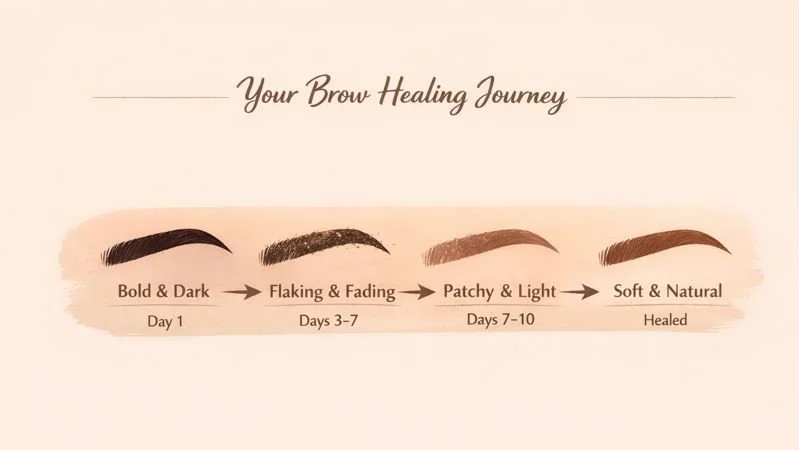
Over the following weeks, your brows will go through several normal healing stages. Healing takes around 4–6 weeks, and changes are especially noticeable as this is on the face. Please be reassured these changes are completely normal and vary from client to client. Skin heals at different rates; some clients experience little to no flaking, while others may flake more and take longer to heal.
Areas with less natural brow hair, such as the front or tail of the brow, may fade more quickly as hair helps protect and retain pigment. As your skin repairs itself, excess pigment on the surface will naturally dry and may form light flaking or crusting. Skin type plays a role in this process — oilier skin often heals faster but may retain less pigment, while drier skin may flake more yet hold colour better.
It is too early to judge the results over the first few days or even a week post procedure, very often it looks like hardly any pigment has held, the colour will resurface over the 4 weeks. Conversely it can also look dark at first — this is completely normal. Over time, the colour will soften which is why you will need a top-up session to achieve even colour retention. Results should only be assessed after full healing and your op
*The area may feel tender for a few days after the procedure
For any questions:
Nadine Elsham
Email: info@luxelinestudio.co.uk